10 Games Like Undertale for Choices, Humor, and Heart
Find 10 games like Undertale with consequential choices, memorable characters, unusual combat, dark humor, and emotional pixel-art stories.
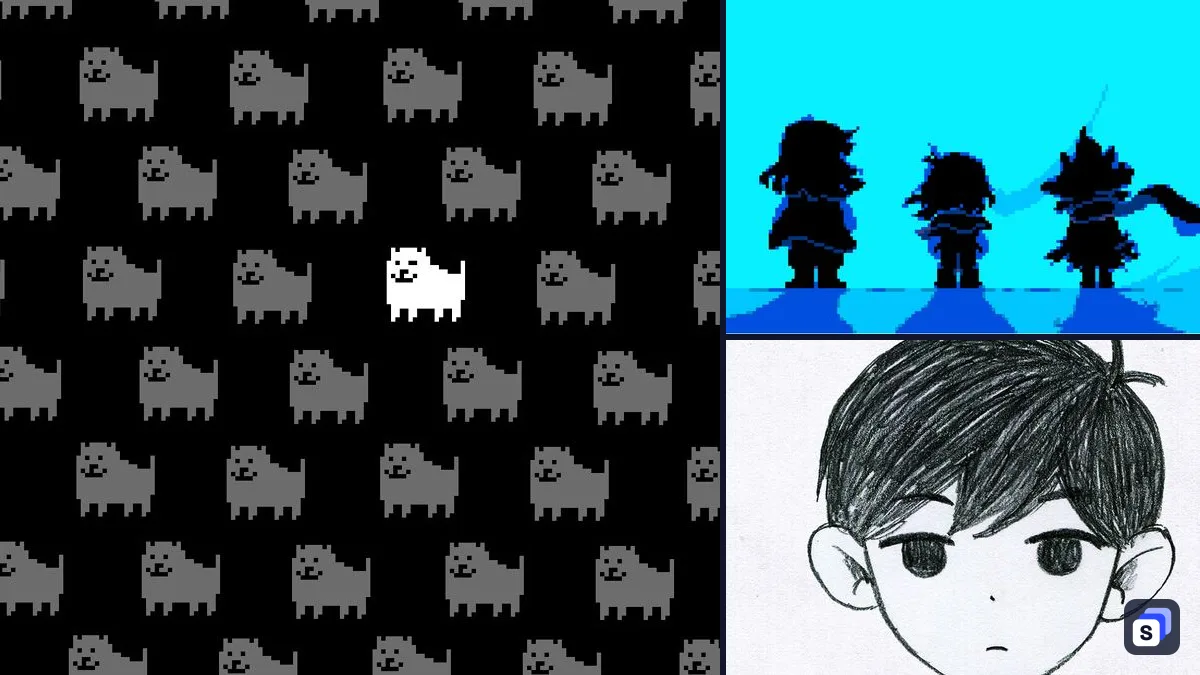
Undertale is a single-player RPG built around memorable monsters, choices that matter, several endings, humor, and encounters where destruction is not required. These 10 alternatives preserve different parts of that identity, and DELTARUNE is the best overall match because it comes from Toby Fox and combines sparing enemies, action-heavy battles, comedy, and emotional storytelling in a parallel adventure.
What makes Undertale worth replacing
A convincing Undertale alternative needs more than pixel graphics. The games below connect their characters and stories to concrete player actions, then distinguish themselves through systems such as party combat, environmental puzzles, branching narration, platforming, or dialogue-led exploration.
The picks at a glance
| Game | What it shares with Undertale | Main difference | Modes |
|---|---|---|---|
| DELTARUNE | Toby Fox’s humor, emotional characters, action-driven battles, and sparing enemies | A party explores a parallel story | Single-player |
| OneShot | Pixel-art storytelling, consequential choices, and awareness of the player | The world directly recognizes the player’s existence | Single-player |
| OMORI | A colorful cast, dark turns, multiple outcomes, and RPG structure | Psychological horror drives the story | Single-player |
| LISA: The Painful | Dark humor, consequential decisions, and a pixel-art RPG format | Party management unfolds in a harsher post-apocalyptic world | Single-player |
| Cave Story+ | Memorable characters, multiple endings, and retro presentation | Shooting, platforming, and exploration replace turn-based RPG encounters | Single-player; multiplayer; co-op; split-screen co-op |
| The Stanley Parable: Ultra Deluxe | Comedy, player-aware storytelling, choices, and multiple endings | First-person exploration revolves around resisting or following a narrator | Single-player |
| Night in the Woods | Character-focused writing, humor beside serious themes, and meaningful choices | Town exploration and conversations replace combat | Single-player |
| To the Moon | Pixel-art presentation, humor, music, and an emotional story | Memory exploration carries more weight than combat | Single-player |
| The Henry Stickmin Collection | Comedy, branching decisions, and many endings | Failure is a central reward in a choose-your-own-path structure | Single-player |
| Eastward | Detailed pixel art, strange characters, humor, and emotional storytelling | Action-RPG combat and environmental puzzles shape the journey | Single-player |
DELTARUNE
DELTARUNE is a single-player RPG and a parallel story to Undertale from Toby Fox. Its battles mix command-based decisions with action as you fight or spare opponents, while a party travels through a mysterious world alongside new and familiar characters. That combination preserves Undertale’s clearest mechanical tension: an encounter can demand active survival without making violence the only response.
The major difference is the party structure. Undertale centers its moral relationship between one protagonist, individual monsters, and the player’s decisions, whereas DELTARUNE distributes abilities and personality across a group. The parallel setting also means it is not simply another path through the Underground. Start here if the battle format, comedy, music, and character writing mattered equally, but expect a separate story with its own rules rather than a direct continuation.
OneShot
A surreal top-down puzzle adventure, OneShot asks the player to guide a child through a mysterious world and restore its long-dead sun. Its pixel-art setting, choices, and emotionally charged mission echo Undertale’s ability to make a small world feel personally connected to the player’s actions. Most importantly, the world knows the player exists, turning the boundary between the person at the computer and the character on screen into part of the premise.
OneShot trades Undertale’s combat encounters for exploration and puzzles. That shift makes decisions and the relationship with the child more central than dodging attacks or choosing how to handle an opponent. It fits readers who valued Undertale’s fourth-wall pressure and the sense that saving a world involves personal responsibility. Anyone mainly chasing bullet-dodging battles should start with DELTARUNE instead, because OneShot puts its mechanical emphasis on guidance and discovery.
OMORI
OMORI is a single-player RPG about exploring a strange world filled with colorful friends and foes. Its warm surface, pixel graphics, story focus, and multiple endings make it familiar to Undertale players who liked seeing comedy and companionship sit beside frightening consequences. The path taken can determine the protagonist’s fate and affect others, so progression carries narrative weight beyond completing battles.
Psychological horror is the defining difference. Undertale can become unsettling, but OMORI makes that discomfort a central part of its identity and contrasts colorful spaces with darker material. It is the better fit when the appeal lies in an RPG that gradually changes the meaning of its characters and world. The heavier horror focus is also the main reason to skip it if Undertale’s lighter jokes and merciful encounter system were the priority.
LISA: The Painful
Set in a post-apocalyptic world, LISA: The Painful follows a broken man through a miserable journey shaped by party-based RPG systems. It shares Undertale’s dark humor, pixel presentation, psychological unease, and emphasis on choices with lasting consequences. Both games use familiar RPG expectations to make the player’s decisions feel uncomfortable rather than treating every obstacle as routine combat.
LISA: The Painful is far harsher in tone and organizes play around a party instead of Undertale’s solitary encounters with monsters. Its post-apocalyptic setting also replaces the Underground’s eccentric communities with a world defined by damage and scarcity. This is the alternative for readers who want Undertale’s moral pressure pushed toward psychological horror and difficult trade-offs. Its bleak premise, rather than its comedy, remains the decisive contrast with the other picks.
Cave Story+
A retro-styled action adventure, Cave Story+ combines running, jumping, shooting, flying, and exploration across a large connected world. Memorable characters, a story-led journey, and multiple endings give Undertale fans reasons to pay attention to actions beyond the next encounter. Its 2D presentation also supports the same kind of focused indie scale, where locations and characters carry more importance than visual spectacle.
The difference is immediate in motion. Cave Story+ is a platformer and shooter, so success depends on traversal, aiming, and exploration instead of selecting mercy or surviving turn-based attack patterns. It suits players who want a character-driven adventure with alternate outcomes but prefer direct action. Co-op, multiplayer, and split-screen co-op are available alongside single-player, making it the only pick here that applies its retro adventure format to shared play without turning into a narrative party game.
The Stanley Parable: Ultra Deluxe
The Stanley Parable: Ultra Deluxe is a first-person adventure built around Stanley, an office, a narrator, and repeated decisions about which instructions to follow. Like Undertale, it notices the player’s behavior, uses comedy to question control, and leads choices toward multiple endings. The central conflict is not a monster battle but the unstable relationship between narration, obedience, and agency.
Its 3D, first-person exploration creates the list’s sharpest visual and mechanical departure from Undertale. There are no pixel-art RPG encounters; walking through a doorway can become the meaningful decision, and repetition helps reveal how the game responds. This is the strongest match for readers fascinated by Undertale’s fourth-wall tricks and its willingness to undermine the idea of winning. The trade-off is that character relationships give way to a sustained argument between the player and the narrator.
Night in the Woods
Focused on exploration, story, and character, Night in the Woods fills its town with dozens of people to meet and activities to pursue. It shares Undertale’s interest in funny dialogue, serious undercurrents, stylized 2D spaces, and choices that shape how the player experiences its cast. Returning to familiar places and talking to residents makes character knowledge the reward for paying attention.
Combat is not the organizing system. Night in the Woods builds momentum through town exploration and relationships, so its emotional effect comes from conversations and the changing context around them rather than enemy encounters. It suits readers who remember Undertale primarily for getting attached to its characters and uncovering more beneath their jokes. Those wanting mercy mechanics or bullet-dodging challenges will find a closer mechanical comparison in DELTARUNE, while this game commits fully to everyday interactions and narrative discovery.
To the Moon
Two doctors travel backward through a dying man’s memories in To the Moon, trying to fulfill his final wish artificially. The single-player adventure shares Undertale’s pixel-art presentation, prominent music, humor, and capacity to build an emotional story without visual excess. Moving through connected memories gradually changes the player’s understanding of the man and the request at the center of the journey.
To the Moon places far less weight on conventional combat and RPG progression. Its defining system is memory traversal, which makes the unfolding narrative more important than mastering encounters or deciding whether to spare enemies. It is a natural next game for readers whose strongest Undertale memories involve its soundtrack, character revelations, and shifts between jokes and sadness. The focused structure offers fewer tactical decisions, but every visited memory serves the doctors’ attempt to reconstruct one life.
The Henry Stickmin Collection
A choose-your-own-path adventure, The Henry Stickmin Collection turns decisions into comic branches where failing can be more entertaining than succeeding. It overlaps with Undertale through 2D presentation, comedy, choices that matter, and many endings that reward trying alternatives. Instead of hiding every wrong route, it makes failed plans part of the material the player is meant to see.
That focus on failure changes the emotional stakes. Undertale can make a decision feel morally consequential, while Henry Stickmin more often treats the branch itself as an opportunity for a joke, surprise, or reference. The collection fits players who enjoyed replaying Undertale to see how the game reacts but want a lighter, point-and-click structure. Its paths are explicit comic experiments rather than RPG encounters, so curiosity about every bad option becomes the main engine of progress.
Eastward
Eastward is an adventure RPG set in a society on the brink of collapse, filled with towns, strange creatures, and stranger people. A frying pan, mystic powers, environmental puzzles, and action-RPG combat give its journey concrete mechanical variety. Its detailed pixel art, unusual supporting characters, post-apocalyptic mystery, and balance of humor with emotional storytelling all connect naturally with what many readers value in Undertale.
Unlike Undertale’s choice-led encounters, Eastward asks the player to act directly during combat and solve obstacles in the environment. The focus on a traveling duo also makes the relationship at the center of the adventure more fixed than Undertale’s shifting bonds with individual monsters. Choose it when a carefully built pixel world and character-driven journey matter more than branching outcomes. Among these picks, its frying-pan combat provides the most grounded contrast to Undertale’s abstract heart-shaped defense sequences.
How we chose these games
Each pick is a PC game that shares several defining Undertale qualities, such as consequential choices, multiple endings, pixel-art presentation, dark or absurd comedy, psychological tension, emotional storytelling, or unconventional encounters. The final group also had to offer a supported distinction that changes play, from OneShot’s player-aware puzzles and Cave Story+‘s platforming to Night in the Woods’ conversation-led exploration; readers adjusting Undertale on a computer can also use the Undertale fullscreen guide.
Questions
What game is most similar to Undertale?
DELTARUNE is the closest match because it pairs Toby Fox's writing with action-driven battles, the option to spare opponents, and a cast of new and familiar characters. Its party-based parallel story makes it distinct from Undertale.
Which games like Undertale have choices and multiple endings?
OneShot, OMORI, LISA: The Painful, Cave Story+, The Stanley Parable: Ultra Deluxe, and The Henry Stickmin Collection all connect player decisions or actions to different outcomes. Each emphasizes a different consequence, from a world's fate to deliberately comic failure.
Are there games like Undertale without much combat?
Yes. Night in the Woods emphasizes exploration and character conversations, while To the Moon follows two doctors through a dying man's memories. The Stanley Parable: Ultra Deluxe replaces battles with exploration, narration, and repeated choices.
Which Undertale alternative has the darkest story?
LISA: The Painful is the darkest option here, using a post-apocalyptic setting, psychological horror, party-based RPG systems, and decisions with lasting consequences. OMORI is another dark choice built around colorful worlds and psychological horror.

Guides written and checked by the SuperDuperBundle team against our own price data and the stores' published policies.