10 Games Like The Forest for Survival and Horror
Explore 10 games like The Forest with hostile worlds, crafting, base building, solo survival, co-op play, and distinct threats.
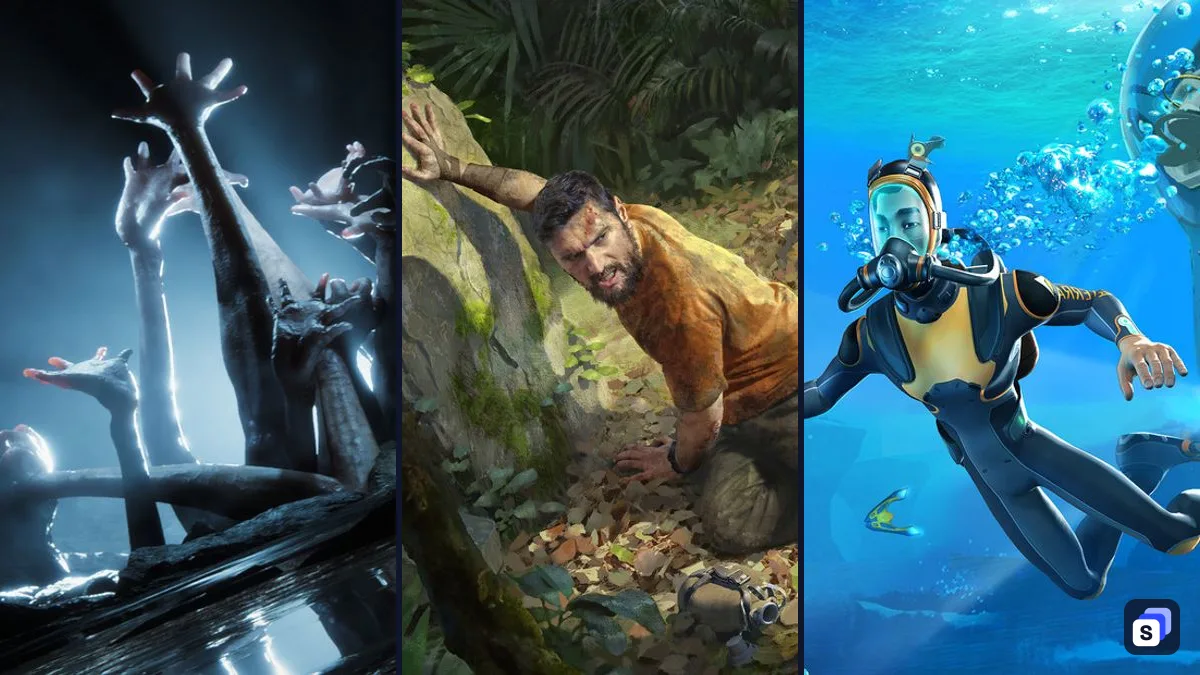
The Forest combines first-person survival horror with open exploration, crafting, shelter construction, and battles against cannibalistic mutants. These ten alternatives preserve different parts of that structure; Sons Of The Forest is the closest overall match because it returns to a remote, cannibal-infested island with building, crafting, and co-op.
What makes The Forest worth replacing
The closest substitutes make a hostile environment matter as much as its enemies. Each pick connects survival to concrete systems such as base construction, resource gathering, environmental exposure, predatory wildlife, or the pressure of preparing before darkness arrives, while several also support co-op.
The picks at a glance
| Game | What it shares with The Forest | Main difference | Modes |
|---|---|---|---|
| Sons Of The Forest | First-person island survival, cannibals, crafting, and building | A separate missing-person mission in a new remote hellscape | Single-player, co-op, online co-op, multiplayer |
| Green Hell | Dense wilderness, shelter building, hunting, and constant natural danger | Real-life survival techniques in the Amazon | Single-player, co-op, online co-op, multiplayer |
| Subnautica | Crash survival, crafting, base building, exploration, and lurking threats | The world is an alien ocean navigated with submarines | Single-player |
| Grounded | Resource gathering, construction, co-op, and hostile creatures | The backyard is seen at insect scale | Single-player, co-op, online co-op, multiplayer |
| Stranded Deep | Plane-crash premise, scavenging, building, and vulnerability | Pacific islands and ocean hazards replace mutant-filled woods | Single-player, co-op, split-screen co-op, online co-op, multiplayer |
| Darkwood | A threatening forest, scavenging, crafting, and sustained horror | Top-down play follows a day-and-night hideout rhythm | Single-player |
| Project Zomboid | Looting, crafting, building, and survival against human-like monsters | Isometric zombie simulation with farming, fishing, and RPG skills | Single-player, co-op, split-screen co-op, online co-op, multiplayer, PvP, online PvP |
| ICARUS | Wilderness exploration, hunting, crafting, and base construction | Missions and open-world operations unfold after failed terraforming | Single-player, co-op, online co-op, multiplayer |
| Raft | Gathering, crafting, construction, and co-op survival | The base itself floats and expands across the ocean | Single-player, co-op, online co-op, multiplayer |
| The Long Dark | First-person isolation, scavenging, crafting, and wilderness tension | Cold and wildlife replace mutants, with no co-op | Single-player |
Sons Of The Forest
Sons Of The Forest sends its protagonist to locate a missing billionaire on a remote island overrun by cannibals. It retains the first-person construction, crafting, exploration, and survival horror that define The Forest, so gathering materials and establishing shelter remain tied to surviving hostile territory.
The decisive similarity is the enemy pressure: both games place human survival against cannibal inhabitants rather than relying only on hunger or weather. Sons Of The Forest also supports single-player and online co-op, preserving the choice between isolated survival and shared building.
Its main difference is a new island and mission rather than a return to the original passenger-jet crash. That makes it the direct continuation for readers who want the same broad structure before considering alternatives that trade cannibals for oceans, zombies, or environmental simulation.
Green Hell
The Amazon in Green Hell is an open survival environment where crafting, hunting, fighting, gathering, and shelter construction draw on real-life survival techniques. Like The Forest, it turns dense vegetation into both a source of materials and a screen hiding danger, while supporting solo play and online co-op.
Green Hell places more weight on the jungle itself. The extreme environment shapes moment-to-moment decisions even when no enemy is immediately visible, so preparation is directed toward enduring the wilderness rather than primarily fortifying against cannibal attacks.
This is the better fit for players who value physical survival detail and want a harsher natural setting without giving up first-person exploration or cooperative building. For more horror-led options beyond survival crafting, these PC horror games shift the emphasis toward fear in several different forms.
Subnautica
After a crash, Subnautica strands the player in an alien underwater world of coral reefs, volcanoes, cave systems, and dangerous wildlife. Gathering materials, crafting equipment, constructing bases, and pushing into hostile territory create the same progression from exposure to greater security found in The Forest.
The ocean changes every part of that progression. Submarines extend exploration, depth separates safer reefs from more threatening regions, and survival depends on preparing for dives rather than defending a woodland shelter from cannibals.
Subnautica is single-player, making it a match for the solitary side of The Forest rather than its co-op experience. It suits readers who want environmental mystery and fear of unseen predators, with discovery pulling them outward as strongly as survival pushes them back toward a base.
Grounded
Grounded shrinks its characters to the size of ants and turns an ordinary backyard into a vast survival landscape. Players face giant insects while collecting resources, crafting equipment, and building bases alone or through online co-op, closely matching The Forest’s balance of construction and roaming danger.
The scale is the defining difference. Grass becomes towering cover, and familiar insects occupy the predator role that mutants fill in The Forest, producing danger through a recognizable place made physically overwhelming rather than through a remote horror setting.
Grounded works especially well for groups that want cooperative survival and base building with a less oppressive premise. The insect ecosystem still gives every resource trip a specific threat, but the backyard setting creates a more adventurous contrast to The Forest’s cannibal territory.
Stranded Deep
A Pacific plane crash leaves the survivor of Stranded Deep scavenging, discovering, and building across an ocean environment. The crash-survivor premise closely echoes The Forest, as does the need to turn gathered materials into shelter and tools while confronting life-threatening situations.
Its geography produces a different survival pattern. Small islands and open water replace one continuous forest, making travel between resource locations part of the danger and shifting the major threats toward isolation at sea rather than a society of mutants.
Stranded Deep supports single-player, online co-op, and split-screen co-op. It is a practical alternative for two players who want the vulnerability and construction of The Forest but prefer ocean exploration and a stronger focus on surviving the aftermath of the crash itself.
Darkwood
Daylight in Darkwood is used to scavenge and explore an ever-changing free-roam forest; night sends the player back to a hideout to endure what approaches in the dark. The woods, resource pressure, crafted defenses, and uncertainty outside shelter all connect directly to The Forest’s survival horror tension.
Perspective and pacing separate the two. Darkwood uses a top-down view and a pronounced day-and-night structure, so horror comes from preparing a hideout before night rather than freely switching between exploration and first-person combat.
This single-player pick is for readers who consider dread and forest-bound danger more important than co-op or large construction projects. Its repeated transition from daytime scavenging to nighttime confinement provides a tighter horror rhythm than the broader sandbox offered by The Forest or the co-op chaos covered in games like Lethal Company.
Project Zomboid
Project Zomboid is an isometric survival simulation about looting, building, crafting, fighting, farming, and fishing through a zombie outbreak. Like The Forest, expeditions for supplies support a safer base, while a hostile population can turn a routine journey into a fight to return alive.
Project Zomboid differs through long-term sandbox simulation and RPG skills. Zombies replace cannibalistic mutants, and the elevated viewpoint makes awareness, positioning, and management feel different from The Forest’s immediate first-person encounters.
The game is in Early Access and supports solo play, co-op, split-screen co-op, multiplayer, and PvP. It fits players who want survival to expand into farming and fishing over time, with multiplayer capable of adding either cooperation or danger from other survivors.
ICARUS
Failed terraforming created the savage wilderness of ICARUS, where players hunt, gather, craft, build, and prospect while completing narrative quests. Its forests and other hostile biomes reproduce The Forest’s cycle of leaving shelter for resources, then using those materials to improve survival capacity.
ICARUS structures its PvE content as open-world operations or individual missions. That distinction gives expeditions a clearer assigned purpose than The Forest’s freer island survival, while the science-fiction setting replaces cannibal horror with the consequences of an altered planet.
Solo and online co-op support make ICARUS suitable for players who want construction and wilderness teamwork but prefer objective-led progression. The additional focus on seeking exotic matter also gives resource expeditions a defined economic target inside the fiction, not merely a need to survive another night.
Raft
A small floating platform is the starting base in Raft, where players collect drifting debris, scavenge reefs, craft equipment, and expand their home across a vast sea. The growing base provides the same visible progression as a shelter in The Forest, and a man-eating shark keeps resource gathering connected to danger.
Raft’s central difference is that home and transport are the same structure. Instead of establishing a fixed camp and exploring outward through woods, the player continually develops a moving platform while the ocean carries it between opportunities and threats.
It supports solo play and online co-op, making task sharing possible as the raft becomes more complex. Raft is the strongest option here for players who enjoy construction as much as horror but want the base itself, rather than a hostile island, to define the journey.
The Long Dark
The Long Dark places a lone survivor in a frozen wilderness after a geomagnetic disaster. First-person exploration, crafting, scavenging, and the need to read a hostile landscape preserve The Forest’s isolation, but the main dangers are cold, wildlife, and the wider natural environment.
There are no zombies or mutants, which makes the game’s tension quieter and more strictly environmental. Removing base-focused co-op and cannibal attacks shifts attention toward individual judgment about movement, supplies, and exposure across an expansive frozen region.
The Long Dark is single-player and best matches readers who found The Forest most compelling when they were alone, under-equipped, and far from shelter. Its frozen setting strips the comparison down to self-reliance against nature rather than combat against an organized enemy.
How we chose these games
Every pick is a PC survival game that shares several defining qualities with The Forest, such as open-world exploration, crafting, construction, horror, first-person survival, or a dangerous sandbox. The order favors concrete overlap first: Sons Of The Forest preserves the closest overall structure, while later entries deliberately change one major element, including perspective, environment, enemy type, mission format, or multiplayer focus.
Questions
What game is most similar to The Forest?
Sons Of The Forest is the closest match because it keeps the first-person survival horror, cannibal threat, crafting, construction, and solo or co-op structure.
Which game like The Forest has the most realistic wilderness survival?
Green Hell puts greater emphasis on real-life survival techniques in the Amazon, including hunting, gathering, shelter construction, and managing a hostile jungle environment.
Are there games like The Forest with co-op?
Yes. Sons Of The Forest, Green Hell, Grounded, Stranded Deep, Project Zomboid, ICARUS, and Raft all support co-op alongside their survival systems.
Which game like The Forest is best for solo exploration?
Subnautica is a strong solo option because its alien ocean combines crafting, vehicles, base building, dangerous wildlife, and exploration-driven mystery.

Guides written and checked by the SuperDuperBundle team against our own price data and the stores' published policies.