9 Games Like The Quarry With Choices That Matter
Explore nine games like The Quarry with branching stories, tense decisions, multiple endings, and threats that can change who survives.
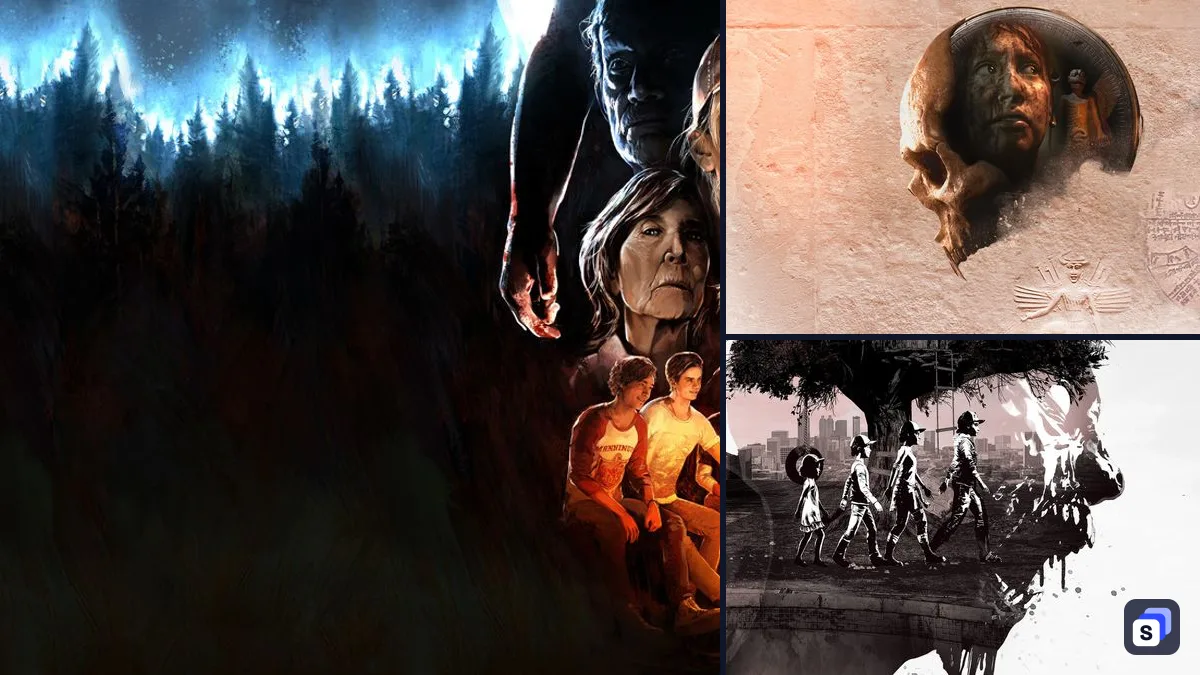
The Quarry is a cinematic horror adventure in which decisions and quick-time events determine whether nine summer-camp counselors survive a night of hostile locals and deadly creatures. These nine alternatives preserve its branching stories, multiple endings, or vulnerable casts, with Until Dawn offering the closest match through its isolated slasher setting and life-or-death choices.
What makes The Quarry worth replacing
The Quarry ties character survival to decisions made under pressure, then lets those consequences reshape later scenes and endings. The games below share at least two of its defining qualities, including cinematic presentation, branching paths, psychological or supernatural threats, quick-time events, and situations where saving everyone is difficult or impossible.
The picks at a glance
| Game | What it shares with The Quarry | Main difference | Modes |
|---|---|---|---|
| Until Dawn | Cinematic slasher horror where decisions affect survival | A snowy mountain replaces the summer-camp setting | Single-player |
| The Dark Pictures Anthology: House of Ashes | Branching group survival with multiple endings | Soldiers face creatures inside a buried Sumerian temple | Single-player, co-op, online co-op, split-screen co-op |
| The Walking Dead: The Telltale Definitive Series | Character deaths and decisions with lasting consequences | An episodic zombie saga spanning 23 episodes | Single-player |
| Detroit: Become Human | Interconnected protagonists and sharply branching outcomes | Science fiction replaces supernatural horror | Single-player |
| Heavy Rain | Quick-time events, multiple protagonists, and possible deaths | The threat is a human murderer rather than a creature | Single-player |
| Beyond: Two Souls | Cinematic supernatural drama driven by decisions | One life story stretches across multiple locations | Single-player, co-op, split-screen co-op |
| Road 96 | Choices reshape later events and possible endings | Procedurally assembled road trips create the variation | Single-player |
| No, I’m not a Human | Paranoia, hard decisions, and multiple endings | The danger arrives at your home and must be identified | Single-player |
| Scarlet Hollow | Dense branching horror where not everyone can be saved | A visual-novel structure prioritizes dialogue and relationships | Single-player |
Until Dawn
Until Dawn is a cinematic slasher adventure about a group trapped on an isolated mountain, where each decision can separate survival from death. Its branching structure, horror-movie presentation, exploration, and several possible endings make it the most direct alternative to The Quarry.
The crucial similarity is responsibility for a vulnerable ensemble rather than a single fixed hero. A choice involving one character can alter what happens to another, so keeping the group alive requires attention to relationships as well as immediate danger. The snowy mountain changes the atmosphere from summer-camp horror to a colder, more confined nightmare, but the pressure of guiding a cast through one deadly situation remains familiar.
Until Dawn only supports single-player, making it less suitable for anyone seeking The Quarry’s multiplayer or split-screen options. For a solo player who wants another cinematic story built around consequential decisions and an isolated slasher scenario, the mountain provides the closest destination.
The Dark Pictures Anthology: House of Ashes
A military search beneath Iraq becomes a struggle for survival in The Dark Pictures Anthology: House of Ashes. American and Iraqi soldiers enter a buried Sumerian temple containing a nest of unearthly creatures, forcing former enemies to cooperate underground.
Like The Quarry, House of Ashes follows several endangered characters through a nonlinear horror narrative with decisions that lead toward different endings. Its central relationship system carries a sharper military tension: cooperation is not simply about keeping friends together, but about building trust between armed opponents while creatures pursue them through a confined ruin. That setting produces claustrophobic survival horror instead of a wide summer-camp mystery.
House of Ashes also retains social play through online co-op and split-screen co-op, alongside its single-player mode. It is the strongest fit here for a group that wants to share responsibility for a branching horror story, especially when one person’s decision can affect characters controlled by someone else.
The Walking Dead: The Telltale Definitive Series
The Walking Dead: The Telltale Definitive Series collects all four seasons, 400 Days, and The Walking Dead: Michonne into a 23-episode story exceeding 50 hours. Its zombie apocalypse supplies the horror, but the harder threats often come from unstable groups, scarce safety, and decisions made under pressure.
The series matches The Quarry through vulnerable characters, branching conversations, multiple endings, and choices that influence who remains part of the story. Its major difference is scale. Rather than concentrating danger into one night, it follows relationships and consequences across an episodic journey, giving bonds more time to develop before later decisions test them.
Combat and spectacle are less central than the human cost of survival. Anyone primarily interested in The Quarry’s character dilemmas rather than its summer-camp slasher framing will find a much longer narrative here, although it is limited to single-player and follows the rhythm of an episodic adventure.
Detroit: Become Human
Three android protagonists carry intersecting stories in Detroit: Become Human, a cinematic adventure set in a near-future conflict between humans and increasingly intelligent machines. Almost every major decision can redirect an individual character’s fate or change the wider outcome.
That branching design echoes The Quarry’s focus on irreversible choices and possible character losses. Following three protagonists also means information and decisions from one path can affect another, creating tension around encounters that may unite or divide their stories. The key difference is subject: Detroit replaces creatures and slasher horror with social conflict, investigations, android identity, and the future of an entire society.
The single-player structure works for readers who want to examine alternative paths over repeated runs without relying on conventional horror. Its danger comes from pursuit, confrontation, and permanent consequences, so the pressure remains even when the story moves from a dark forest to futuristic Detroit.
Heavy Rain
A hunt for the Origami Killer drives Heavy Rain, a psychological crime thriller told through four playable characters following separate leads. Investigation scenes and quick-time events turn mistakes into narrative consequences, while several endings reflect which characters survive and what they uncover.
Heavy Rain shares The Quarry’s cinematic direction, shifting viewpoints, urgent decisions, and possibility of losing members of the playable cast. Its grounded crime story is the defining departure. There are no summer-camp creatures to explain the danger, only a murderer, desperate investigators, and a race to prevent another victim from being claimed.
The detective focus makes Heavy Rain suitable for someone who enjoyed managing The Quarry’s branching outcomes but wants suspense built around evidence and human motives. It is exclusively single-player, and its bleak atmosphere trades group banter for four increasingly desperate perspectives on the same case.
Beyond: Two Souls
Beyond: Two Souls follows Jodie Holmes through different stages of her life and across multiple locations. Jodie shares a supernatural connection with an entity, turning personal decisions and otherworldly encounters into the foundation of a cinematic psychological thriller.
The game overlaps with The Quarry through supernatural horror, quick-time events, consequential choices, and a presentation built around dramatic performances. Instead of managing a large cast over one night, however, the narrative stays centered on Jodie and examines how her unusual connection affects a much broader span of her life. That narrower character focus makes the story more personal but reduces the ensemble-survival puzzle found at Hackett’s Quarry.
Beyond: Two Souls supports single-player and split-screen co-op, allowing two participants to share its central character-entity relationship. It fits readers who want supernatural tension and cinematic interaction without returning to another isolated group being hunted in a single location.
Road 96
Escape is the goal in Road 96, a first-person adventure about hitchhiking toward freedom through the dystopian country of Petria. Its procedurally generated road-trip structure rearranges encounters and characters, while decisions influence both the current traveler and the country’s larger story.
Road 96 resembles The Quarry through branching conversations, several endings, and the uncertainty of not knowing how a meeting will develop. The procedural journey is its main distinction. Instead of replaying one fixed location to test different survival choices, each attempt can produce a different sequence of roadside events, interactions, and threats.
There are no creatures or slasher set pieces, so its tension comes from political danger and the risk of capture. The single-player journey is better for someone drawn to The Quarry’s replayable decision structure than its gore, replacing one terrible night with repeated attempts to reach a border.
No, I’m not a Human
Paranoia takes over a locked home in No, I’m not a Human, an anxiety-horror game set during the End of Times. The central rule is simple but dangerous: remain indoors, decide whom to admit, identify Visitors, and eliminate anything that is not human.
Each visitor turns conversation and observation into a survival decision, reflecting The Quarry’s pressure to act without fully understanding the threat. Multiple endings preserve the appeal of reconsidering earlier choices, but the structure is more intimate and suspicious. Rather than controlling counselors scattered through a camp, you judge people at one doorway while questioning whether your own criteria can be trusted.
This single-player alternative suits readers who want psychological horror with less emphasis on cinematic action. Its fear comes from misidentification: rejecting a human or admitting a Visitor can both carry consequences, so uncertainty itself becomes the pursuing monster.
Scarlet Hollow
A funeral brings the protagonist to a hostile cousin and the declining town of Scarlet Hollow, an Early Access horror visual novel built around a densely branching narrative. A single playthrough reveals less than one fifth of its possible content, and the story explicitly makes saving everyone impossible.
That inability to protect the entire cast closely matches The Quarry’s central survival dilemma. Choices reshape relationships, mysteries, and later paths, while supernatural and psychological threats create danger around the town. Scarlet Hollow differs through presentation: dialogue, illustrated scenes, and character interaction replace cinematic quick-time sequences.
Its single-player format rewards readers who care most about branching possibilities and discovering how different decisions expose new parts of a mystery. The trade-off is a slower, text-heavy pace, but the restricted information in each run makes returning to Scarlet Hollow a way to uncover paths that one visit cannot show.
How we chose these games
Each selection is a PC game connected to The Quarry through at least four characteristic elements, such as decisions that alter the story, multiple endings, cinematic interaction, quick-time events, or psychological and survival horror. It favors games with enough concrete overlap to explain both the similarity and a meaningful difference, while covering solo narratives, co-op horror, episodic drama, procedural journeys, and visual novels.
Questions
What game is most similar to The Quarry?
Until Dawn is the closest match because it combines cinematic horror, life-or-death decisions, multiple endings, and a group trying to survive an isolated nightmare.
Are there multiplayer games like The Quarry?
Yes. The Dark Pictures Anthology: House of Ashes supports online and split-screen co-op, while Beyond: Two Souls includes split-screen co-op alongside its single-player mode.
Which games like The Quarry have multiple endings?
Until Dawn, House of Ashes, The Walking Dead: The Telltale Definitive Series, Detroit: Become Human, Heavy Rain, Road 96, No, I'm not a Human, and Scarlet Hollow all support stories with different possible outcomes.
Which alternative is best without supernatural horror?
Heavy Rain replaces supernatural creatures with an investigation into the Origami Killer, while preserving tense decisions, quick-time events, and several possible endings.
Which game offers the longest story collection?
The Walking Dead: The Telltale Definitive Series contains four seasons, 400 Days, The Walking Dead: Michonne, 23 episodes, and more than 50 hours of gameplay.

Guides written and checked by the SuperDuperBundle team against our own price data and the stores' published policies.