9 Games Like The Walking Dead With Hard Choices
Find nine games like The Walking Dead, from branching dramas to grim survival stories with difficult choices, human bonds, and undead threats.
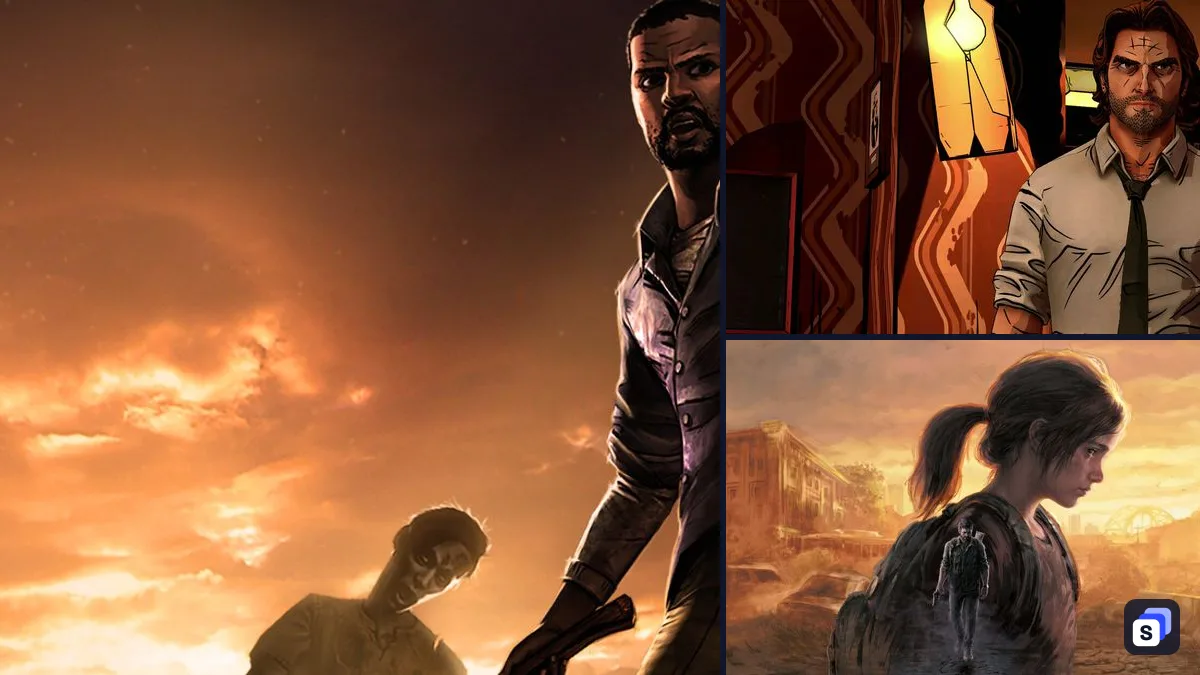
The Walking Dead is an episodic horror adventure built around survival, relationships, and decisions with lasting consequences. These nine alternatives preserve different parts of that design, from branching conversations to desperate journeys through hostile worlds. The Wolf Among Us is the closest overall match because it uses Telltale's choice-driven, episodic format while replacing walkers with a brutal murder mystery.
What makes The Walking Dead worth replacing
The strongest substitutes keep The Walking Dead’s focus on vulnerable characters under pressure, then make the player live with difficult decisions or scarce resources. Some reproduce its dialogue-led storytelling, while others turn the same fear, loss, and responsibility into stealth, combat, crafting, or survivor management; readers continuing Clementine’s story can also use this guide to The Walking Dead games in order.
The picks at a glance
| Game | What it shares with The Walking Dead | Main difference | Modes |
|---|---|---|---|
| The Wolf Among Us | Episodic choices with serious consequences | A noir murder investigation in a fairy-tale world | Single-player |
| Detroit: Become Human | Branching decisions and character-driven tension | Three android perspectives in a futuristic setting | Single-player |
| The Last of Us Part I | A protective bond in a post-apocalyptic America | Stealth, shooting, and direct survival combat | Single-player |
| Beyond: Two Souls | Cinematic decisions and an emotional protagonist | A supernatural connection between Jodie and Aiden | Single-player, co-op, multiplayer, split-screen co-op |
| A Plague Tale: Innocence | A young protector guiding a vulnerable companion | Medieval stealth amid plague rats and war | Single-player |
| Tales from the Borderlands | Five-part storytelling shaped by choices | Comedy and two adventurers on Pandora | Single-player |
| Into the Dead: Our Darkest Days | Zombie survival and consequential decisions | Scavenging, crafting, and managing a survivor group | Single-player |
| Days Gone | Human drama after a pandemic | An open world, motorcycle travel, and infected hordes | Single-player |
| The Forest | Horror, survival, and a missing family member | First-person crafting, building, and cave exploration | Single-player, co-op, multiplayer, online co-op, LAN co-op |
The Wolf Among Us
The Wolf Among Us is an episodic adventure in which Bigby Wolf investigates a bloody murder with wider consequences. Conversations and decisions shape how characters respond to Bigby, giving each encounter the same social pressure that defines Lee’s relationships in The Walking Dead. Its point-and-click presentation and choice-led structure make the transition especially natural for someone who wants another Telltale story.
The major change is the case itself. Instead of surviving an undead collapse, Bigby works through a noir mystery based on the Fables comic books, where familiar fairy-tale figures occupy a dangerous modern underworld. That detective focus makes clues, suspicion, and Bigby’s conduct more important than food, shelter, or escaping walkers. Start here when the appeal of The Walking Dead lies primarily in tense dialogue and decisions that can reshape later events.
Detroit: Become Human
In Detroit: Become Human, the fate of humans and androids changes through decisions made across three protagonists. Scenes can branch toward different outcomes, preserving The Walking Dead’s central pleasure of choosing under pressure and then seeing relationships or lives change because of it. The shifting viewpoints also expose the same conflict from several sides rather than tying the entire story to one survivor group.
Its futuristic android crisis is far removed from a zombie outbreak, and the branching structure is more visibly extensive. Multiple endings turn replaying scenes into an exploration of paths not taken, whereas The Walking Dead concentrates more tightly on carrying emotional consequences forward through an episodic journey. This is the strongest option for readers who want choice density and alternate outcomes above combat or resource survival.
The Last of Us Part I
The Last of Us Part I follows Joel and Ellie across a post-apocalyptic America filled with dangerous allies and enemies. Their journey shares The Walking Dead’s strongest emotional foundation: an adult protector and a younger companion trying to preserve trust while the surrounding society has collapsed. Horror and survival remain grounded in the people they meet, not only the infected threat.
Unlike Telltale’s dialogue-heavy adventure, this is a third-person action game with shooting, stealth, and direct confrontations. That change gives moment-to-moment survival more physical weight, but it offers less control over the story’s direction than a branching conversation system. It fits readers who valued Lee and Clementine’s bond most and want that protective dynamic carried by exploration and combat rather than frequent narrative choices.
Beyond: Two Souls
Beyond: Two Souls is a psychological action thriller centered on Jodie Holmes and the entity Aiden, who has been linked to her since birth. Decisions, quick reactions, and cinematic scenes place Jodie under personal pressure, echoing The Walking Dead’s concern with trust, sacrifice, and survival. The story follows one life across changing circumstances instead of building around a fixed apocalypse survivor group.
Aiden provides the defining difference. The supernatural connection lets the story approach danger and investigation through two linked presences, while co-op and split-screen co-op allow another player to share that relationship. Its globe-spanning psychological story is less focused on community collapse and undead horror, so it works better for someone seeking emotional interactive drama than a close match for walkers or scavenging.
A Plague Tale: Innocence
A Plague Tale: Innocence follows Amicia and her younger brother Hugo through war and plague in a grim medieval setting. Amicia’s responsibility for Hugo creates a clear parallel with The Walking Dead’s protective relationships: movement through danger is shaped by keeping a vulnerable companion alive. Stealth reinforces that fragility because survival often depends on avoiding stronger threats rather than overpowering them.
The danger comes from soldiers, the Inquisition, and swarms of plague rats rather than an undead apocalypse. Its story is also a directed single-player journey, so the player does not repeatedly steer relationships through branching dialogue. The medieval setting and stealth emphasis make it a good match for readers drawn to sibling bonds, sacrifice, and a hostile world where direct confrontation is rarely the safest answer.
Tales from the Borderlands
Set on Pandora, Tales from the Borderlands is a five-part episodic adventure following two people pursuing greatness between Borderlands 2 and Borderlands 3. Dialogue choices, quick-time events, and point-and-click scenes retain the recognizable Telltale rhythm of The Walking Dead. Its two adventurers also create room for competing perspectives within the same unfolding crisis.
The tone is the decisive contrast. Pandora is unforgiving, but Borderlands humor turns danger and failure into comedy instead of sustaining The Walking Dead’s grief and horror. There are no walkers or survival-camp responsibilities at the center; the appeal comes from character chemistry and choices inside a fast-moving caper. It is the right detour for someone who wants Telltale’s episodic interaction without another relentlessly bleak story.
Into the Dead: Our Darkest Days
Into the Dead: Our Darkest Days is a single-player survival game set in Walton City, Texas, after a zombie outbreak. You lead desperate survivors between refuges, scavenging, crafting, and fighting while choices affect a nonlinear struggle. The fallen city, strained group, and constant undead danger closely match The Walking Dead’s interest in what people do when safety disappears.
The difference is managerial and practical. Rather than advancing mainly through conversations and quick-time scenes, you plan supplies, keep the group together, and decide when it is time to move. Its 2.5D presentation also separates it visually from Telltale’s comic-book adventure format. The game is in Early Access, and it suits readers who want hard choices expressed through shelter, resources, and survivor movement rather than dialogue alone.
Days Gone
A post-pandemic America becomes an open road in Days Gone, where Deacon St. John survives as a drifter and bounty hunter. The game shares The Walking Dead’s ruined communities, infected threat, and search for a reason to continue after devastating loss. Human settlements and hostile survivors keep the conflict tied to society as much as the creatures outside it.
Days Gone exchanges episodic decision-making for third-person action across an open world. Motorcycle travel defines how Deacon crosses that space, while large infected hordes create combat and escape problems far beyond Telltale’s short action sequences. Choose it when the apocalypse itself is the attraction and you want to physically traverse its roads, fight its threats, and manage the risks of long journeys.
The Forest
After a passenger jet crash, The Forest leaves a lone survivor in a mysterious forest inhabited by cannibalistic mutants. Scavenging, makeshift safety, and the search connected to a kidnapped son give its horror a personal stake, much as The Walking Dead ties wider catastrophe to one relationship. Exploring caves pushes the mystery forward while exposing the player to increasingly dangerous spaces.
Here, survival is a hands-on system rather than a sequence of narrative prompts. Building shelter, crafting equipment, and gathering necessities determine whether you can keep exploring, and co-op lets a group divide those jobs. The open structure offers less authored dialogue and fewer explicit moral decisions, but it makes every risky cave trip or exposed camp a practical survival choice. It is the clearest pick for readers who want to build their own refuge instead of negotiating a place inside someone else’s group.
How we chose these games
Each pick reproduces at least two defining parts of The Walking Dead: consequential choices, episodic presentation, vulnerable relationships, post-apocalyptic horror, undead threats, or survival under pressure. The order starts with the closest narrative and structural matches, then moves through emotional journeys into games that emphasize infected worlds, resources, exploration, and direct combat.
Questions
Which game is most like The Walking Dead?
The Wolf Among Us is the closest match for Telltale's episodic structure, dialogue choices, and consequences. Its detective mystery replaces the zombie apocalypse, so The Last of Us Part I is a better fit if the ruined world and protective relationship matter more.
What games like The Walking Dead have choices that matter?
Detroit: Become Human, Beyond: Two Souls, The Wolf Among Us, and Tales from the Borderlands all build their stories around player decisions. Detroit: Become Human puts the greatest emphasis on branching outcomes, while the Telltale games stay closest to The Walking Dead's presentation.
Are there games like The Walking Dead with co-op?
Beyond: Two Souls and The Forest include co-op options. Beyond: Two Souls remains a cinematic story, while The Forest turns survival into first-person scavenging, crafting, and base building.
Which alternative has the strongest zombie survival focus?
Days Gone puts infected hordes and survival across a post-pandemic open world at the center of play. Into the Dead: Our Darkest Days is more focused on managing a survivor group through scavenging, crafting, and movement between refuges.

Guides written and checked by the SuperDuperBundle team against our own price data and the stores' published policies.