15 Hardest Video Games That Demand Real Mastery
Discover 15 of the hardest video games, from exacting action RPGs and shooters to roguelikes, platformers, fighters, and strategy sandboxes.
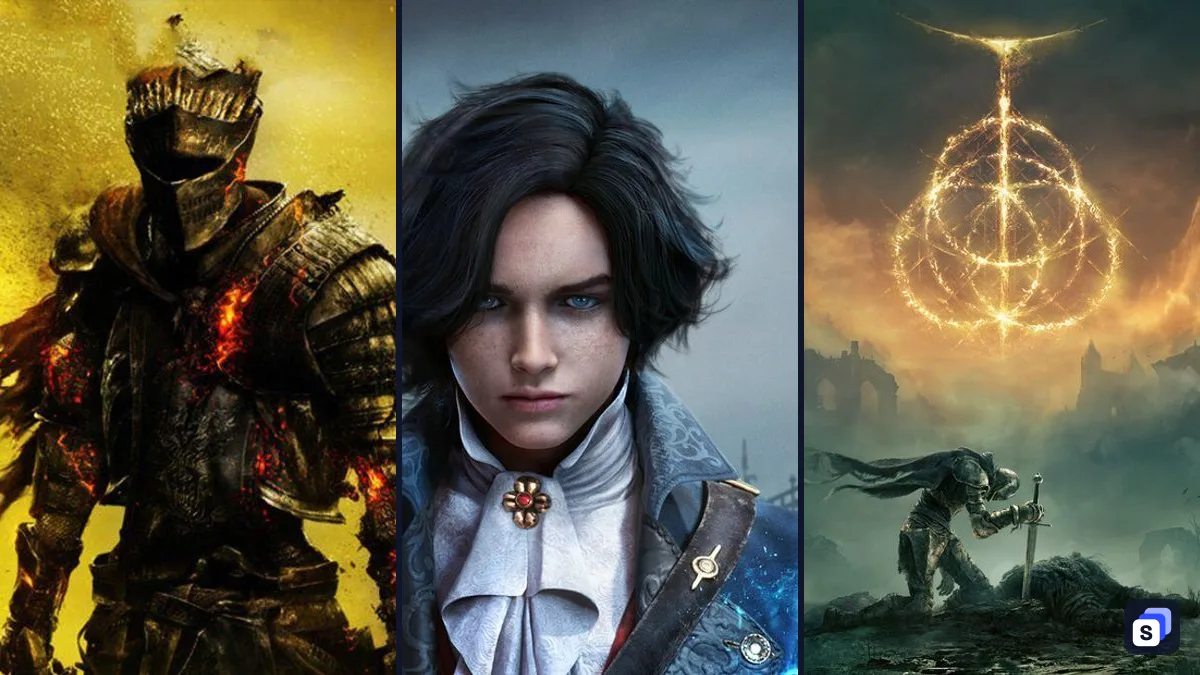
The best hardest video games test more than raw reaction speed: they demand boss-pattern recognition, precise movement, adaptation, or long-term planning. This list covers 15 demanding PC games, led by DARK SOULS III, Lies of P, and ELDEN RING for their distinct approaches to punishing action RPG combat.
The list at a glance
| # | Game | Why it is on the list | Modes |
|---|---|---|---|
| 1 | DARK SOULS III | Fast action RPG combat built around stamina, positioning, and relentless enemies | Single-player, co-op, multiplayer |
| 2 | Lies of P | A dark Pinocchio reinterpretation with tightly focused soulslike combat | Single-player |
| 3 | ELDEN RING | Open-world freedom paired with dangerous dark-fantasy encounters | Single-player, co-op, multiplayer, PvP |
| 4 | Hollow Knight | Precise 2D combat and platforming across a ruined insect kingdom | Single-player |
| 5 | Cuphead | Boss-focused run-and-gun action with dense projectile patterns | Single-player, split-screen co-op, multiplayer |
| 6 | Returnal | Roguelike runs and bullet-heavy third-person shooting on a hostile alien world | Single-player, online co-op, multiplayer |
| 7 | Sifu | Tight Kung Fu combat that demands control of counters and positioning | Single-player |
| 8 | DOOM Eternal | Fast first-person combat against aggressive demon armies | Single-player, multiplayer, PvP |
| 9 | Dead Cells | No-checkpoint runs through an ever-changing castle | Single-player |
| 10 | Enter the Gungeon | Dodge rolls, shifting dungeon layouts, and overlapping bullet patterns | Single-player, multiplayer |
| 11 | Super Meat Boy | Momentum-heavy precision platforming through lethal hazards | Single-player |
| 12 | Getting Over It with Bennett Foddy | Physics-driven climbing where one mistake can erase major progress | Single-player |
| 13 | Hotline Miami | Fast top-down gunplay and close combat with little room for error | Single-player |
| 14 | Crusader Kings III | Medieval dynasty management shaped by succession, schemes, and relationships | Single-player, multiplayer, PvP |
| 15 | SpeedRunners | Competitive running where movement, swings, weapons, and screen position collide | Single-player, multiplayer, PvP |
1. DARK SOULS III
DARK SOULS III is a dark-fantasy action RPG built around deliberate attacks, defensive timing, and exploration through hostile environments. Stamina management makes every dodge and strike a commitment, while fast enemies punish players who attack without leaving enough energy to escape.
Its difficulty is concentrated in direct combat: learning an opponent’s reach, recognizing an opening, and controlling position matter more than rushing forward. Co-op and multiplayer broaden the available modes, but the single-player path still puts execution and patience at the center of progress. Compared with ELDEN RING, its more directed structure gives you fewer opportunities to abandon a troublesome route and approach the wider world from another direction. It belongs at the top for players who want demanding combat inside a focused action RPG journey rather than an open-world detour system.
2. Lies of P
Set against a dark Belle Époque backdrop, Lies of P turns the story of Pinocchio into a single-player action RPG. Its challenge comes from close-range confrontations in which enemy movement, defensive reactions, and the timing of your own attacks must be read under pressure.
The strongest link to DARK SOULS III is its dark-fantasy soulslike structure: exploration leads into dangerous encounters where careless commitments are costly. The important difference is focus. Lies of P is exclusively single-player, so its challenge is not softened or reshaped by co-op partners or competitive encounters. Its steampunk setting also gives the journey a mechanical, story-driven identity rather than the ruined medieval fantasy of DARK SOULS III. Players seeking a tightly contained test with an elegant but hostile atmosphere get a clearer fit here than those looking for social modes or a broad sandbox.
3. ELDEN RING
ELDEN RING places punishing action RPG combat inside the open world of the Lands Between. Dangerous enemies and dark-fantasy locations still reward measured attacks and careful positioning, but open exploration changes how you respond when one route becomes overwhelming.
Unlike DARK SOULS III’s more directed progression, ELDEN RING lets you travel elsewhere, discover another area, and return with greater knowledge of the combat system. That freedom does not make individual encounters harmless; it changes difficulty from a fixed wall into a navigation and preparation problem as well as an execution test. Single-player, co-op, multiplayer, online co-op, and PvP modes provide several ways to engage with that danger. It is the strongest starting point on this list for players who want severe combat without being locked into one immediate obstacle, while focused linear progression is better served by DARK SOULS III or Lies of P.
4. Hollow Knight
A vast ruined kingdom of insects forms the setting for Hollow Knight, a hand-drawn 2D action platformer. Twisting caverns combine exploration with tainted creatures, so progress depends on reading the environment as carefully as an enemy’s movement.
Its difficulty links combat precision to traversal. A failed jump, poor position, or mistimed attack can matter in the same stretch, making spatial control the central skill rather than stamina management. Compared with the three action RPGs above, Hollow Knight presents its threats on a 2D plane and keeps the experience entirely single-player. That narrower visual space makes hazards readable, but it also exposes every movement mistake. It suits players who want demanding exploration and platforming woven into combat rather than a sequence dominated by equipment choices or multiplayer options. The shifting caverns and insect kingdom give each hard-won route a distinct sense of place.
5. Cuphead
Boss battles sit at the center of Cuphead, a run-and-gun action platformer presented through hand-drawn animation inspired by 1930s cartoons. The cheerful watercolor backgrounds contrast with fights that fill the screen with moving threats and demand accurate jumps, shots, and evasive movement.
Cuphead shares Hollow Knight’s 2D precision but removes much of the interconnected exploration from the main challenge. Difficulty is concentrated into learning a boss encounter, identifying safe spaces, and carrying clean execution through its changing attack patterns. Split-screen co-op and multiplayer distinguish it from the single-player platformers around it, allowing two players to face the pressure together. The trade-off is that anyone looking for a large world to map may find its boss-heavy format too concentrated. For players who want repeated attempts to build recognition until a visually chaotic fight becomes readable, Cuphead makes that process the whole attraction.
6. Returnal
Returnal is a third-person shooter that traps Selene in a hostile cycle of roguelike challenges. Bullet-heavy clashes make movement and threat recognition essential, while each new run asks you to survive without relying on one permanently familiar sequence.
Its strongest similarity to Cuphead is the need to read dense projectile patterns while continuing to attack. Returnal changes that test through three-dimensional movement, ranged gunplay, and run-based variation on an alien world. Death therefore challenges both execution and adaptation: knowledge transfers forward even when the immediate run does not. Online co-op gives the game a social option, but its single-player mode preserves the isolation of Selene’s cycle. Players who dislike losing the shape of a promising attempt may prefer handcrafted stages, while those who want a shooter that forces fresh decisions after failure will find the randomized pressure more meaningful than simple repetition.
7. Sifu
Revenge drives Sifu, a single-player third-person brawler built around tight Kung Fu combat. Close-range fights require control of timing, spacing, and surrounding threats because the next punch or counter happens at far shorter range than in a shooter.
The game shares DARK SOULS III’s emphasis on learning through failed encounters, yet it replaces fantasy weapons and stamina-led duels with martial-arts exchanges. Its beat-‘em-up structure also means groups and positioning can matter alongside a single opponent’s attack rhythm. With no co-op or competitive mode listed, every fight tests the player’s own command of the combat system. Sifu is the right challenge for someone who wants cinematic hand-to-hand action and repeated refinement of the same core skills. Anyone seeking projectile dodging or broad exploration should look to Returnal or ELDEN RING instead; Sifu keeps its pressure physical, immediate, and personal.
8. DOOM Eternal
Hell’s armies invade Earth in DOOM Eternal, a first-person shooter that sends the Slayer through demon-filled combat across dimensions. Difficulty comes from processing threats quickly while moving, aiming, and choosing targets in spaces designed for aggressive action.
Returnal also combines shooting with evasive movement, but DOOM Eternal replaces roguelike resets with a structured campaign and a first-person view. That perspective brings every charging demon closer and makes rapid battlefield awareness a central demand. Its modes include single-player, multiplayer, online PvP, and PvP, so the mechanical speed extends beyond the campaign. This entry fits shooter players who want sustained offensive pressure rather than the cautious spacing of a soulslike or the repeated room layouts of a roguelike. The demon roster and dimensional campaign keep the challenge grounded in combat decisions made from one second to the next.
9. Dead Cells
Dead Cells is a 2D action platformer that sends each run through a sprawling, ever-changing castle. There are no checkpoints within the run, so killing, dying, learning, and repeating form the structure rather than a temporary consequence.
Its combat shares the timing demands of Hollow Knight, while its roguelite design connects it to Returnal. The main difference from both is the combination of 2D platforming, changing routes, and run-specific tools, which makes movement and adaptation inseparable. A plan that worked with one setup may not define the next attempt, so progress depends on understanding systems instead of memorizing only one sequence. Dead Cells is entirely single-player and best fits someone who enjoys rebuilding momentum after a defeat. Players who prefer preserving a fixed world state may find its resets harsher than Hollow Knight’s exploration, but the changing castle makes every return another practical test.
10. Enter the Gungeon
A band of misfits descends through Enter the Gungeon to reach a legendary gun said to kill the past. This bullet-heavy dungeon crawler turns dodge rolling, shooting, looting, and even table flipping into survival tools inside changing runs.
The game resembles Returnal through its fusion of roguelike structure and projectile-dense combat, but its top-down view compresses enemy fire into a readable 2D arena. Compared with Dead Cells, it emphasizes ranged weapons and dodge trajectories rather than platforming through a castle. Multiplayer provides an option beyond the single-player descent, adding coordination to rooms already built around overlapping threats. Enter the Gungeon rewards players who can scan an entire arena, choose a safe line, and adjust when the run supplies a different set of guns. Its challenge is less about perfecting one fixed loadout than staying functional when the dungeon refuses to repeat itself exactly.
11. Super Meat Boy
Super Meat Boy strips difficulty down to fast 2D movement through stages lined with lethal hazards. As Meat Boy, the task is to control momentum through narrow routes where a mistimed jump can immediately end the attempt.
Hollow Knight combines platforming with exploration and combat, whereas Super Meat Boy makes traversal itself the main opponent. That focus changes improvement into a visible process: each retry can refine a jump angle, landing point, or burst of speed without requiring a new character build. The single-player structure keeps success tied to personal execution, and the compact stages suit players who enjoy practicing a difficult sequence until movement becomes consistent. Its obstacle-driven design is less appealing to anyone who needs story decisions or strategic management to sustain a challenge. Here, saws and tight passages provide all the feedback required.
12. Getting Over It with Bennett Foddy
Physics replaces conventional running and jumping in Getting Over It with Bennett Foddy. The single-player climb asks you to move upward by controlling a sledgehammer, turning small adjustments into the basis of navigation.
Its connection to Super Meat Boy is precision, but the consequence of failure is markedly different. Instead of quickly restarting one compact obstacle course, a poor movement can cost substantial vertical progress and force a repeat of earlier terrain. That structure tests emotional control alongside mechanical learning because recovering calmly becomes part of the task. There are no multiplayer modes to redistribute the pressure, and the unusual physics demand a skill that transfers less directly from standard platformers. Players drawn to steady mastery of one deliberately awkward control scheme will understand its appeal; those who need frequent protected milestones may find the lost altitude more punishing than any enemy.
13. Hotline Miami
Neon-lit violence drives Hotline Miami, a fast top-down action game built around gunplay and close combat. Rooms packed with armed enemies reward quick route reading because hesitation can be as dangerous as reckless movement.
Its overhead perspective resembles Enter the Gungeon, but the practical rhythm is different. Hotline Miami focuses on short, planned bursts through fixed spaces rather than long roguelike runs shaped by changing loot. That makes a failed room useful information: enemy placement, approach angle, and weapon choice can all inform the immediate retry. The experience is entirely single-player, with no partner available to cover a mistake. It fits players who like turning an initially chaotic room into a controlled sequence through speed and memory. Compared with DOOM Eternal’s extended first-person arenas, Hotline Miami compresses the same demand for aggression into sharp, compact encounters.
14. Crusader Kings III
Crusader Kings III changes the meaning of difficulty by placing it inside a medieval dynasty simulation. You guide a noble house through love, war, schemes, succession, and the continuing consequences of a bloodline that must outlive individual rulers.
Unlike every action game above it, the core test is not a dodge or attack window. Relationships, titles, marriages, and competing interests create management problems that can develop across generations. The sprawling sandbox supports single-player, multiplayer, online PvP, and PvP, making human rivals another possible source of uncertainty. Its long-term recovery depends on dynasty management rather than repeated mechanical execution. A lost fight may matter, but the more distinctive threat is a political choice that weakens the dynasty beyond one battlefield. Crusader Kings III therefore earns its place by testing planning, judgment, and adaptation on a much longer clock.
15. SpeedRunners
SpeedRunners is a competitive running game in which four players can run, jump, swing, and deploy weapons or pickups to force opponents off-screen. Difficulty emerges from maintaining speed while reacting to both the course and rivals trying to disrupt your line.
Super Meat Boy makes precise movement a private contest against hazards; SpeedRunners turns movement into direct competition. A technically clean route can still fail if another runner changes the situation with a pickup or pushes the camera advantage, so mastery includes prediction as well as execution. Single-player is available, but multiplayer, online PvP, and PvP define the sharper contest described by its four-player setup. This final entry is for players who want platforming pressure measured against other people rather than a fixed boss or obstacle pattern. The screen edge becomes the threat, and every swing has immediate competitive consequences.
How we picked them
The selection prioritizes PC games that make difficulty a clear part of play rather than relying on a single isolated spike. Each entry tests a distinct combination of skills, including stamina control, boss-pattern reading, projectile dodging, precision platforming, run adaptation, close-range counters, competitive movement, or dynasty management. The ordering gives the highest positions to demanding games with broad, sustained challenges, then expands into specialized tests that may be harder for players whose weakest skill is the one being targeted.
Questions
What is the hardest video game on this list?
DARK SOULS III takes the top position because its fast enemies, stamina-based combat, and demanding bosses punish poor timing. Lies of P is the closer fit for players who prefer a single-player challenge.
Which hard game is best for beginners?
ELDEN RING is the most flexible starting point here because its open world lets you leave a difficult encounter and explore elsewhere. Its demanding action RPG combat still requires careful timing and preparation.
What is the hardest platformer in the list?
Super Meat Boy is the platforming pick built most directly around exact movement, hazards, and repeated attempts. Hollow Knight adds exploration and combat, while Getting Over It with Bennett Foddy makes lost progress the central threat.
Are any of these hard games cooperative?
Yes. DARK SOULS III, ELDEN RING, Cuphead, and Returnal include co-op among their supported modes, while Enter the Gungeon supports multiplayer. The available mode changes the challenge, but it does not remove the underlying execution demands.
Which game is hardest without relying on fast reflexes?
Crusader Kings III shifts the difficulty toward dynasty management, alliances, succession, and long-term planning. Its challenge comes from interconnected political decisions rather than boss patterns or precision movement.

Guides written and checked by the SuperDuperBundle team against our own price data and the stores' published policies.