Best Games With Skill Trees for Different Playstyles
Compare seven games with skill trees, from loot-driven action RPGs to tactical party adventures, and find the right progression system.
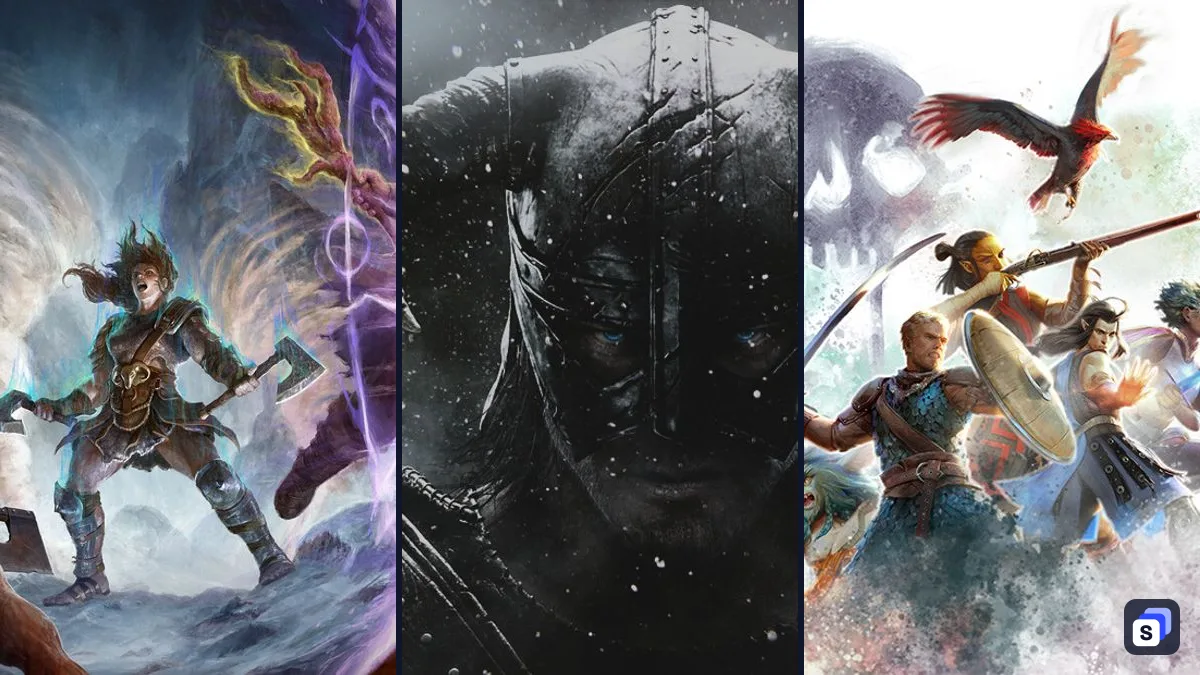
The best games with skill trees make progression change how you fight, explore, or manage a party rather than merely raising statistics. These seven picks cover loot-driven combat, open-world role-playing, tactical parties, stealth, and ranged hunting, with Diablo IV leading for class-focused builds shaped by both skills and equipment. The Elder Scrolls V: Skyrim Special Edition and Pillars of Eternity II: Deadfire are the other leading choices for open-ended character growth and detailed party planning.
The list at a glance
| # | Game | Why it is on the list | Modes |
|---|---|---|---|
| 1 | Diablo IV | Class trees connect active abilities, passive bonuses, and loot-driven specialization | Single-player, online co-op, co-op, multiplayer, online PvP, PvP |
| 2 | The Elder Scrolls V: Skyrim Special Edition | Perk constellations develop around combat, stealth, crafting, and magic skills | Single-player |
| 3 | Pillars of Eternity II: Deadfire | Class abilities, multiclass options, and companion development support tactical parties | Single-player |
| 4 | Cyberpunk 2077 | Attributes and perks support hacking, weapons, stealth, and cyberware-led approaches | Single-player |
| 5 | Horizon Zero Dawn Complete Edition | Upgrades reinforce tactical ranged attacks, traps, stealth, and resource use | Single-player |
| 6 | Dragon Age Inquisition | Class specializations and companion trees shape a balanced fantasy party | Single-player, online co-op, co-op, multiplayer |
| 7 | Assassin’s Creed Valhalla | A broad skill web connects melee combat, ranged attacks, and stealth | Single-player |
1. Diablo IV
Diablo IV is an action RPG built around fighting through Sanctuary, collecting loot, and developing a chosen class. Each class has a branching set of active skills and passive improvements, so progression can reinforce a preferred attack type or add supporting effects around it. Equipment matters alongside those choices, making character development a continuing interaction between the skill tree and the items found in dungeons.
That relationship gives Diablo IV a clearer build focus than open-world RPGs where one character can gradually learn almost everything. Its fast, isometric combat also turns a build decision into an immediate change in crowd control, mobility, or damage delivery. Single-player is available, while online co-op and competitive modes make it the only pick here that combines a loot chase with both cooperative and player-versus-player options. It fits players who want repeated combat encounters to test and refine a focused class setup.
2. The Elder Scrolls V: Skyrim Special Edition
The Elder Scrolls V: Skyrim Special Edition uses perk constellations to develop a character across weapons, armor, stealth, crafting, and magic. In Skyrim Special Edition, abilities improve through use, while perk points unlock bonuses within the corresponding constellation. Swinging one-handed weapons, sneaking past enemies, or casting spells therefore contributes to a character shaped by what happens during exploration.
This is the most organic progression system on the list because the world and the chosen activities guide advancement together. Unlike Diablo IV’s class-defined structure, Skyrim leaves room to move between warrior, thief, and mage abilities without committing to a fixed party role. Dragons, dungeons, guild quests, crafting, and open-world detours provide different places to apply those perks. The trade-off is that its combat is less tightly centered on ability combinations than the action-heavy picks, but the freedom to redirect a character remains its defining strength.
3. Pillars of Eternity II: Deadfire
Pillars of Eternity II: Deadfire is an isometric RPG about pursuing a rogue god across the Deadfire archipelago with a party and a ship. Pillars of Eternity II: Deadfire gives classes their own active abilities and passive bonuses, while multiclass options combine two archetypes for more specialized roles. Companion development extends the same planning across the entire group rather than concentrating every decision on one hero.
Its strongest distinction is tactical control: combat can run in real time with pausing or in a full turn-based mode. That makes ability timing, party composition, and the relationship between frontline, support, and ranged roles more important than reflexes. Story choices and faction relationships add another layer to character decisions as the party travels between islands. Deadfire suits players who enjoy examining several interconnected builds and adjusting how each member contributes to an encounter; anyone seeking immediate solo action may find its party administration more demanding.
4. Cyberpunk 2077
Set in Night City, Cyberpunk 2077 is a first-person action RPG in which V navigates an open world shaped by power and body modification. Cyberpunk 2077 organizes character development around attributes and associated perks, supporting approaches based on hacking, firearms, close combat, stealth, or technical tools. Cyberware complements those decisions, linking the character build to movement and combat capabilities.
The first-person viewpoint makes its progression feel different from the isometric systems in Diablo IV and Deadfire. A hacking-focused character can deal with threats through connected devices, while a weapon-focused setup keeps the emphasis on direct shooting or melee engagement. Missions and open-world encounters give those approaches room to overlap, but attribute investment provides a reason to specialize. This is the pick for players who want skill development inside a dense science-fiction city and prefer controlling one adaptable character instead of coordinating companions.
5. Horizon Zero Dawn Complete Edition
Horizon Zero Dawn Complete Edition follows Aloy through a post-apocalyptic open world ruled by Machines. In Horizon Zero Dawn Complete Edition, progression strengthens stealth, ranged attacks, traps, and resource-focused abilities that support hunting. Those upgrades matter because Machine encounters reward preparation, careful positioning, and tactical attacks against dangerous targets.
Horizon Zero Dawn has a narrower character concept than Skyrim or Cyberpunk 2077: Aloy remains a hunter rather than becoming an unrestricted warrior, mage, or hacker. That focus gives the skill system a close relationship with the game’s main threats, letting new abilities improve ambushes, evasive movement, or battlefield setup without replacing its ranged-combat foundation. Exploration also feeds the hunting structure by moving Aloy through Machine territory and the ruins of a future Earth. It works best for players who want a readable progression path tied to one refined combat identity rather than a large web of class combinations.
6. Dragon Age Inquisition
Dragon Age Inquisition is a fantasy RPG that places the Inquisitor at the head of a party responding to a world-threatening crisis. Dragon Age Inquisition begins with Warrior, Rogue, or Mage development and expands those identities through specializations. Companions have their own ability paths, so distributing skills is also an exercise in building a group that can cover damage, protection, control, and support.
The party focus creates a middle ground between Deadfire’s dense isometric planning and the direct action of Horizon Zero Dawn. Combat can be approached in real time, while strategic control allows closer management when an encounter demands it. Dialogue decisions and War Table assignments broaden the sense of leading an organization, but the skill trees stay centered on battlefield roles. Its co-op modes distinguish it from most single-player entries here, though the main appeal remains arranging complementary abilities across a fantasy team.
7. Assassin’s Creed Valhalla
Assassin’s Creed Valhalla is an open-world action adventure about Eivor, a Viking warrior establishing a settlement in Dark Ages England. Assassin’s Creed Valhalla presents progression as an expanding web associated with melee power, ranged attacks, and stealth. Gear and runes add another customization layer, while raids, exploration, and settlement growth provide the activities where those upgrades are applied.
Compared with Horizon Zero Dawn’s hunter-focused branches, Valhalla spreads development across a longer historical adventure with direct battles, distant attacks, and assassination tools. The skill web allows hybrid development, so Eivor does not need to remain exclusively stealthy or combat-driven. Its main trade-off is scale: the large world and broad progression map suit players who enjoy gradual advancement across many regions, but they are less concise than a class tree built around a small set of tightly linked attacks. Settlement building gives that long campaign a second form of growth beyond Eivor’s personal abilities.
How we picked them
The selections are PC games in the SuperDuperBundle catalogue whose progression systems support meaningfully different playstyles. Each pick needed enough detail to connect its skill structure to a concrete part of play, such as class abilities, party roles, stealth, tactical hunting, hacking, or open-world character growth. The ordering favors systems that make build decisions central to repeated combat or exploration while still covering distinct forms of action RPG and party-based progression.
Questions
What game has the best skill tree for loot-focused builds?
Diablo IV is the top pick for loot-focused builds because class skills and equipment effects work together. It supports solo play, online co-op, and competitive multiplayer.
Which skill tree game is best for open-world freedom?
The Elder Scrolls V: Skyrim Special Edition is a strong fit for open-world freedom. Its perk constellations let combat, stealth, and magic develop around the abilities you use.
Which game has skill trees for a full party?
Pillars of Eternity II: Deadfire offers detailed ability development across the player character and companions. Multiclass combinations add further control over party roles.
Are all of these games single-player?
Every game on the list includes a single-player mode. Diablo IV and Dragon Age Inquisition also include multiplayer and co-op options.

Guides written and checked by the SuperDuperBundle team against our own price data and the stores' published policies.