14 Best Character Creation Games to Try
Create a hero, shape a build, and explore 14 character creation games with deep role-playing, tactical combat, co-op, and open worlds.
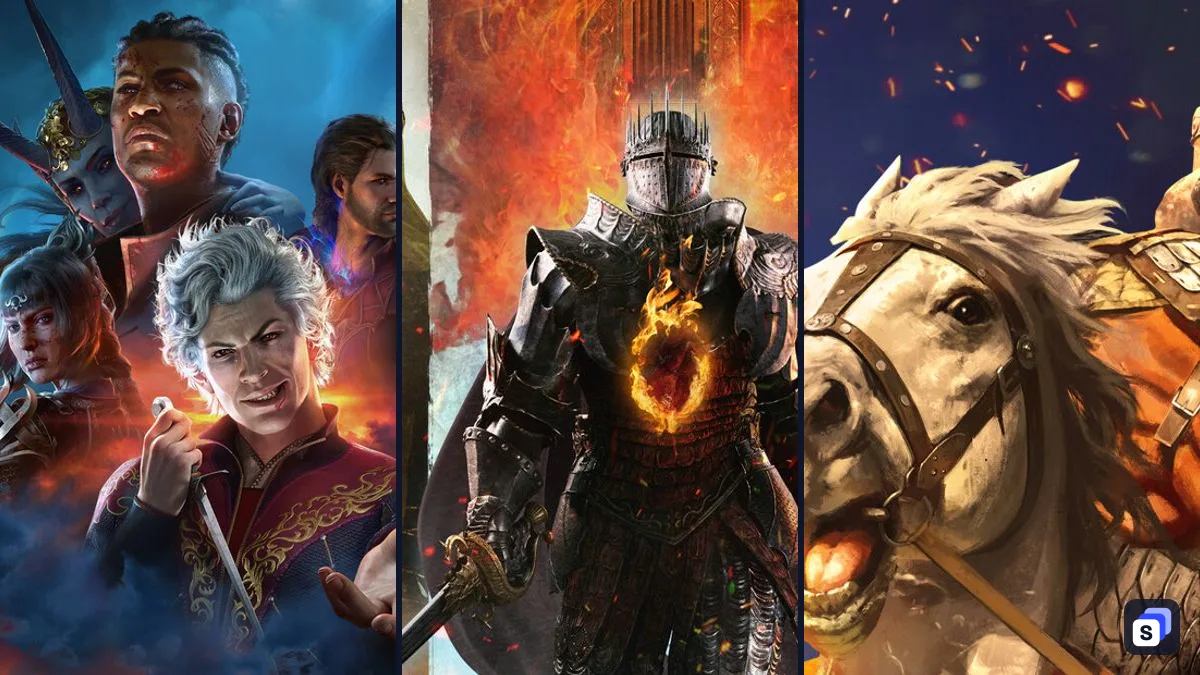
The best games with character creation let the person you design affect more than a portrait: appearance, combat role, party composition, or story decisions should matter after the opening menu. These 14 picks put Baldur's Gate 3, Dragon's Dogma 2, and Mount & Blade II: Bannerlord at the front for reactive role-playing, action-focused party building, and a medieval sandbox shaped by your skills.
The list at a glance
| # | Game | Why it is on the list | Modes |
|---|---|---|---|
| 1 | Baldur’s Gate 3 | A custom adventurer’s identity and choices shape a party-based fantasy story | Single-player, co-op, multiplayer |
| 2 | Dragon’s Dogma 2 | The Arisen, vocation, party, and approach to encounters are all player-defined | Single-player |
| 3 | Mount & Blade II: Bannerlord | Character growth connects directly to diplomacy, trade, crafting, conquest, and warfare | Single-player, multiplayer, PvP |
| 4 | Cyberpunk 2077 | Body modification and first-person role-playing suit a custom mercenary in Night City | Single-player |
| 5 | Monster Hunter: World | A created hunter’s identity develops through equipment made from hunted monsters | Single-player, co-op, multiplayer |
| 6 | Mass Effect Legendary Edition | One custom Commander Shepard anchors three connected single-player campaigns | Single-player |
| 7 | CODE VEIN | Anime-styled customization supports demanding action and flexible character builds | Single-player, co-op, multiplayer |
| 8 | Solasta: Crown of the Magister | Party creation feeds into positioning, vertical battlefields, and dice-driven tactics | Single-player, co-op, multiplayer |
| 9 | ELDEN RING | A custom Tarnished explores a hostile open world and develops through combat choices | Single-player, co-op, multiplayer, PvP |
| 10 | The Elder Scrolls V: Skyrim Special Edition | Character customization opens into a fantasy world of dragons, magic, and exploration | Single-player |
| 11 | Fallout 4 | A custom survivor explores a post-apocalyptic open world built around shooting and role-playing | Single-player |
| 12 | Starfield | Character creation frames a science-fiction adventure focused on space exploration | Single-player |
| 13 | Dragon Age: The Veilguard | A created hero leads a fantasy party in a focused single-player RPG | Single-player |
| 14 | DARK SOULS III | Appearance and starting setup lead into precise, difficult dark-fantasy combat | Single-player, co-op, multiplayer |
1. Baldur’s Gate 3
Baldur’s Gate 3 is a party-based fantasy RPG set in the Dungeons & Dragons universe. Its creator supports a custom adventurer whose identity sits alongside class-driven combat, companions, and decisions involving fellowship, betrayal, survival, sacrifice, and power.
The strongest reason to start here is reactivity. Character choices matter inside a story-rich campaign rather than ending once appearance is set, while turn-based encounters give each party member a defined tactical purpose. Unlike Dragon’s Dogma 2 or ELDEN RING, combat pauses for deliberate positioning and actions instead of testing real-time timing. It fits players who want their custom hero to influence conversations and party strategy, with co-op available for groups that want to make those decisions together.
2. Dragon’s Dogma 2
A player-created Arisen leads Dragon’s Dogma 2, a narrative-driven action RPG in an immersive fantasy world. Character creation connects with vocation, party selection, and the freedom to approach situations in different ways, so the hero’s role remains visible after the opening setup.
Its main similarity to Baldur’s Gate 3 is the emphasis on a custom protagonist supported by a party. The important difference is real-time action: encounters prioritize direct movement and attacks rather than turn-based commands. Dragon’s Dogma 2 therefore suits someone who wants character and party decisions inside a single-player adventure but prefers immediate combat. The vocation and party framework makes the created Arisen part of a broader combat arrangement instead of an isolated avatar.
3. Mount & Blade II: Bannerlord
Mount & Blade II: Bannerlord combines action, role-playing, strategy, and simulation in a medieval sandbox. You create a character, then use diplomacy, crafting, trade, and conquest while raising armies and fighting beside them in large real-time battles.
Bannerlord shares the freedom to define a role with open-world RPGs such as Skyrim, but its character serves a political and military campaign rather than a fixed heroic quest. Skills matter alongside army command and territorial ambition, shifting customization toward the kind of leader you become. Multiplayer and PvP also separate it from the single-player sandboxes on this list. It is the clearest fit for players who want their personal build to sit inside warfare, economics, and faction-level strategy.
4. Cyberpunk 2077
Night City provides the setting for Cyberpunk 2077, an open-world action RPG about a mercenary in a dangerous future shaped by power, glamour, and constant body modification. Creating the protagonist matches that setting because identity and augmentation are part of the city’s central premise.
Like Fallout 4 and Starfield, Cyberpunk 2077 combines first-person action, exploration, and role-playing around a custom lead. Its defining difference is the dense futuristic city and focus on cybernetic transformation rather than a post-apocalyptic wasteland or spacefaring frontier. The single-player structure keeps attention on that protagonist and the story surrounding Night City. Choose it when visual identity and a science-fiction setting matter as much as shooting and open-world movement.
5. Monster Hunter: World
A customized hunter enters a living environment filled with large creatures in Monster Hunter: World. The central system is a repeated hunt-and-prepare structure: pursue monsters, use available tools, and return better equipped for the next target.
Character creation begins the identity, but equipment and combat choices continue to define the hunter. That creates a stronger gear-focused progression than story-reactive games such as Baldur’s Gate 3, while the difficult action still rewards learning a target’s behavior. Co-op and multiplayer make it a natural pick for friends who want their created characters to develop through shared hunts. Players seeking dialogue-driven identity may prefer Mass Effect Legendary Edition, since Monster Hunter: World puts the creature encounter and equipment progression first.
6. Mass Effect Legendary Edition
Mass Effect Legendary Edition places a customized Commander Shepard at the center of three connected science-fiction RPG campaigns. The collection includes the single-player base content and more than 40 downloadable content packs from Mass Effect, Mass Effect 2, and Mass Effect 3.
The key appeal is continuity: the same protagonist carries a long narrative rather than beginning again in a separate world after one campaign. Like Baldur’s Gate 3, it joins party-based role-playing with consequential decisions, but its battles use third-person shooting instead of turn-based tactics. The fixed role of Commander Shepard also gives customization a more defined narrative frame than Bethesda’s open-world sandboxes. It fits players who want one created hero to remain the anchor across an extended space opera.
7. CODE VEIN
Post-apocalyptic ruins and vampiric imagery frame CODE VEIN, an action RPG built around demanding third-person combat. Its detailed anime-styled character customization gives the created fighter a sharply different visual identity from the worn medieval heroes of DARK SOULS III and ELDEN RING.
CODE VEIN shares deliberate encounters and difficult enemies with those dark-fantasy games, but it supports a more overtly stylized hero and online co-op. The journey also centers on uncovering the protagonist’s past and escaping a living nightmare, giving the avatar a personal mystery within the setting. It works for players who want precise action and build experimentation without giving up expressive appearance options. The anime presentation is the real dividing line for anyone deciding between this and FromSoftware’s harsher visual worlds.
8. Solasta: Crown of the Magister
Solasta: Crown of the Magister is a turn-based tactical RPG based on the SRD 5.1 ruleset. Its battles make initiative, attacks of opportunity, position, and battlefield height central, while choices and dice rolls determine how plans resolve.
Solasta’s distinctive character-creation angle is party construction rather than devotion to one cinematic protagonist. That resembles tabletop group building and creates direct dependencies between roles during combat. Compared with Baldur’s Gate 3, the emphasis falls more heavily on explicit tactical rules and vertical positioning than on a highly reactive presentation. Single-player, co-op, and multiplayer support make it suitable for players who enjoy discussing movement, coverage, and party balance before committing to an action.
9. ELDEN RING
A custom Tarnished crosses the Lands Between in ELDEN RING, a dark-fantasy action RPG about claiming the power of the Elden Ring and becoming an Elden Lord. The open world joins exploration with difficult third-person combat, dragons, magic, and hostile encounters.
ELDEN RING shares deep visual creation and build ownership with CODE VEIN, but its broader open world places more emphasis on discovery between confrontations. Co-op, multiplayer, and PvP add other players to a journey that can otherwise be pursued alone. The character’s identity is expressed primarily through combat development and equipment rather than lengthy dialogue reactions. It suits players who want the freedom to take a personally designed warrior into a dangerous world where execution and route choice matter more than party conversation.
10. The Elder Scrolls V: Skyrim Special Edition
The Elder Scrolls V: Skyrim Special Edition is a single-player fantasy action RPG built around an open world of adventure, dragons, and magic. The created character becomes the constant center of exploration, allowing appearance and playstyle to develop as the journey expands.
Skyrim shares Bethesda’s open-world structure with Fallout 4 and Starfield, but its fantasy setting makes spellcasting and dragon encounters part of the character fantasy. Unlike Bannerlord, it does not turn the hero into an army commander inside a war simulation. The focus stays on personal exploration and role-playing across the world. It remains a useful option for players who want to leave the main path, define their own priorities, and build a fantasy adventurer without managing a co-op group.
11. Fallout 4
The player-created survivor of Fallout 4 enters a post-apocalyptic open world that combines action, shooting, exploration, and role-playing. Ruined environments and the search for resources give the customized protagonist a harsher context than Skyrim’s fantasy wilderness.
Fallout 4 uses Bethesda’s familiar single-player freedom, but its firearms and devastated setting change the practical meaning of a build. Compared with Cyberpunk 2077, the world is defined by collapse rather than a functioning megalopolis obsessed with modification. The game fits players who want to explore at their own pace while shaping a survivor around first-person combat and RPG progression. Anyone seeking multiplayer character display should look to Monster Hunter: World or ELDEN RING instead.
12. Starfield
Bethesda Game Studios moves its custom-character format into space with Starfield, a single-player science-fiction adventure RPG. Exploration is the defining activity, placing the created spacefarer in a new universe rather than a familiar fantasy or post-apocalyptic setting.
Starfield has the same broad role-playing ancestry as Skyrim and Fallout 4, including a first-person viewpoint and open-world design. Its important difference is scale and theme: planets, space travel, and futuristic discovery replace dragons or irradiated ruins. This makes it the strongest match for someone who wants Bethesda-style character ownership but would rather chart a science-fiction path. The single-player mode also keeps that journey personal, without co-op partners changing the pace of exploration.
13. Dragon Age: The Veilguard
Rook is the custom lead of Dragon Age: The Veilguard, a single-player fantasy RPG about uniting the Veilguard and defying the gods. The created hero operates within a group, connecting personal identity to companions and a larger fantasy conflict.
Its party focus creates common ground with Baldur’s Gate 3 and Dragon’s Dogma 2, but The Veilguard remains entirely single-player. Action-oriented combat also separates it from Baldur’s Gate 3’s turn-based encounters, while the named role of Rook gives the protagonist a defined place in the story. This is a fit for players who want to shape a fantasy hero and lead a companion group without coordinating online. The trade-off is that multiplayer and co-op are absent from the available modes.
14. DARK SOULS III
DARK SOULS III sends a customized warrior through a dark-fantasy action RPG built around difficult combat, exploration, and dense environmental storytelling. Appearance establishes the hero, while the player’s combat decisions determine how that identity performs against punishing threats.
The game shares third-person action and dark fantasy with ELDEN RING, yet its adventure is less open and more concentrated. Co-op and multiplayer allow assistance or encounters with others, but precise solo combat remains a central draw. DARK SOULS III is for players who prefer a focused route through dangerous areas over ELDEN RING’s wide roaming. Character creation matters as personal expression, while success depends on learning timing and surviving the next confrontation.
How we picked them
Each game had to be available in the PC catalogue and make a created character meaningful through at least one concrete system: story decisions, party roles, combat development, equipment, exploration, diplomacy, or army command. The order favors games where customization remains relevant after the opening screen, while also covering single-player adventures, co-op hunts, tactical campaigns, open worlds, and multiplayer combat.
Questions
What is the best game with character creation?
Baldur's Gate 3 is the best overall pick because character creation affects appearance, party role, dialogue, and story choices. Dragon's Dogma 2 is a stronger fit when action combat and party composition matter more.
Which character creation game is best for co-op?
Monster Hunter: World is a strong co-op choice because a customized hunter develops through crafted equipment earned from group hunts. Baldur's Gate 3 and Solasta: Crown of the Magister offer co-op with turn-based party tactics instead.
Which game lets you create a full party?
Solasta: Crown of the Magister lets you build a party and coordinate its roles under a turn-based ruleset. That makes party composition more central than in games focused on a single custom protagonist.
Are all character creation games RPGs?
No, but every game on this list uses role-playing progression, action-RPG systems, strategy, or simulation to give the created character a practical role. Mount & Blade II: Bannerlord, for example, combines character building with diplomacy, trade, armies, and real-time battles.

Guides written and checked by the SuperDuperBundle team against our own price data and the stores' published policies.